
The American Soccer Paradox: Why the 2026 World Cup Matters More Than We Think
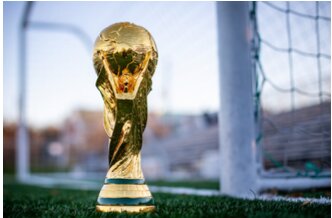
Remember ’94? When America hosted the World Cup, soccer felt like that shy college guy who showed up to the party. Baseball, basketball, and football ran the place. That tournament got MLS started. But more importantly, it made us wonder: Could soccer actually find a seat at this table?
Now, 32 years later, with the U.S., Mexico, and Canada hosting the 2026 World Cup, we’re right back asking: Can soccer finally just make it? Here’s the twist: America’s sports machine is already well-oiled without it, yet this very spectacle, with its buzzing stadiums and overheard conversations of fans throwing some fun bucks in betting using pari promo code, might just be the catalyst that ignites the game’s slow-burn rise.
The Comfortable Illusion
America’s sports machine thrives in closed universes. The NFL owns its draft; the NBA, its playoffs. Legacies are built domestically, rarely looking beyond borders, and are a frictionless ecosystem like a franchise diner with an identical menu city to city.
Major League Soccer adopted this blueprint, prioritizing slow growth over stars to build stability without the World Cup’s glare.
But 2026? That opens the gates to a global feast. Unavoidable, intoxicating, strange flavors spill onto the plate.
Here lies the clash. American fans cherish controlled rhythms like playoffs and salary caps. Soccer’s chaos, relegation heartbreak, and continental glory speak an unfamiliar language of risk.
The World Cup shatters the illusion. It reveals a truth U.S. sports obscure: domestic trophies are merely the first step on a taller, global ladder. This isn’t just a tournament, but a cultural trial by fire that could redefine American sports culture.
The Hidden Opportunity
The 2026 World Cup is more of a generational bridge than a tournament. Young fans already binge European leagues like Netflix shows: this massive event is our chance to connect those passions to the local game. Their passion exists. What’s missing is a shared moment to crystallize it, turning casual interest into lifelong fandom. The Cup provides this. It also acts as a cultural unifier, like the Olympics, where sport fosters unity.
Dual-purpose venues, like Atlanta’s upgraded Mercedes-Benz Stadium, are concrete proof that soccer and football can thrive side-by-side. The irony? The tournament’s actual value isn’t converting die-hard NFL fans, but validating soccer’s niche as a legitimate cultural alternative. Like indie films beside blockbusters, both can thrive.
The Stress Test
Hosting the World Cup is the ultimate reality show. Every detail is scrutinized globally. The key question: Will casual viewers watch Morocco vs. South Korea after Team USA exits?
Then there’s the storytelling gap. U.S. broadcasts often treat soccer as foreign, over-explaining rules while ignoring the cultural drama. It’s like serving gourmet cuisine with a plastic fork: the substance is there, but the experience is cheapened.
Fail this, and soccer remains fringe: a dazzling guest star without a permanent role.
The Long Game
The confetti settles. Now the real work begins.
The 1994 World Cup birthed MLS, but 2026 aims deeper: turning casual observers into lifers. To do it, we need a culture that celebrates loving your hometown MLS side and a European giant roaring for the local band opening for a stadium-filling superstar.
Grassroots investment is essential: free school clinics, better field access, and truly inclusive local leagues. These are vital roots, not feel-good projects.
America now chooses: merely host the world’s game, or finally join it? Joining means embracing soccer’s beautiful chaos, where underdogs triumph and the journey thrills as much as the trophy.
Wrapping It Up
The 2026 World Cup is soccer’s grandest stage, yet it’s a mirror for America. More than showcasing the game, it will reflect us: our love of spectacle, our unease with the unfamiliar, and that deep need to belong to something bigger. Maybe this tournament won’t make soccer the next NFL. And that’s perfectly okay. Its real value lies in testing our adaptability, showing us a world where the game doesn’t need to be self-contained to be loved. Whether we pass that test is up to us. For now, the pitch is set, and the world is watching.
Author

Related Articles

Jokaroom VIP: a straight-talking look for Aussie players
players
Start at Jokaviproom to find new experiences and get moving. Prefer a quick taste before you commit? Try pokies like Elvis Frog in Vegas or Aztec Magic Bonanza to see the pace and …
AI without illusions: How the role of artificial intelligence in business is transforming in 2026
A few years ago, artificial intelligence (AI) seemed like something abstract, futuristic, accessible only to large corporations with gigantic budgets. However, by 2026, AI is turning into a tool for …
Pick a mascot, pick your pace
Jump into 5Gringos Casino . New punters at this 5Gringos online Casino can choose a straightforward starter match with a handful of free spins—easy to understand, handy if you want a quick try. …