No small fish
In 1940, Michigan State University art professors Alma Goetsch and Kathrine Winckler commissioned Frank Lloyd Wright to design a home in Okemos where they could live and create. Now, decades after …
Alma Goetsch and Kathrine Winckler art sale
9 a.m.-4 p.m. Saturday, Oct. 18
Goetsch-Winckler House
2410 Hulett Road, Okemos
experienceusonia.com/visit
Art sale celebrates Alma Goetsch, Kathrine Winckler, Frank Lloyd Wright
In 1940, Michigan State University art professors Alma Goetsch and Kathrine Winckler commissioned Frank Lloyd Wright to design a home in Okemos where they could live and create. Now, decades after their deaths, some of their art is returning to the home.
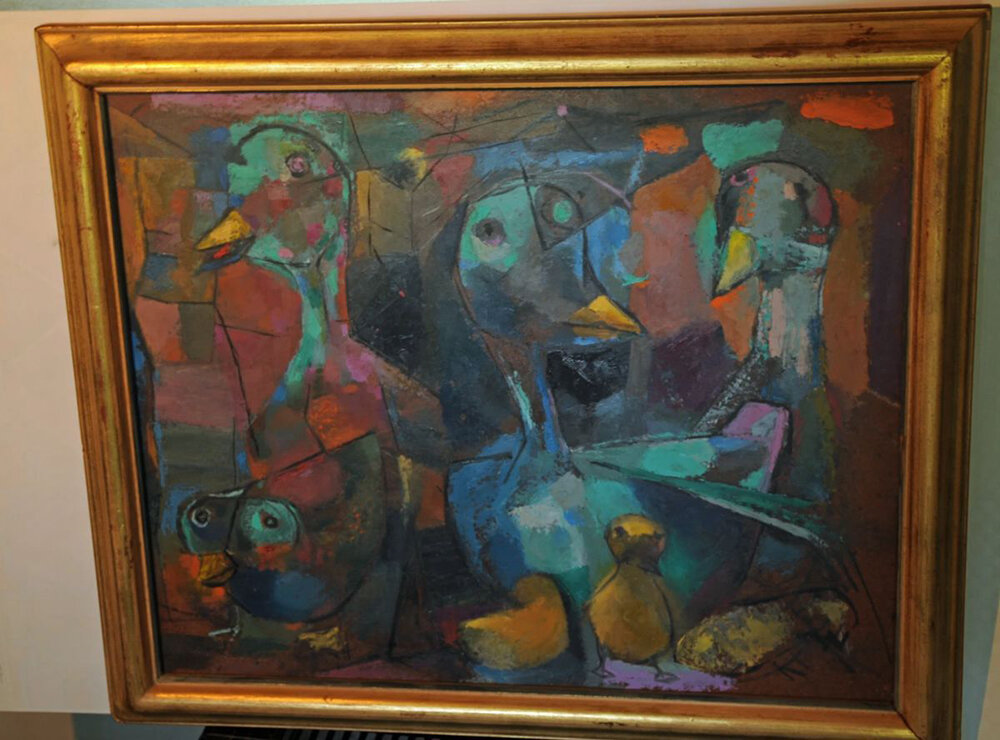
On Saturday, Triola’s Estate Sale Service, owned by more than 60-year veteran Bill Triola, will hold the largest-ever sale of Goetsch and Winckler’s art — 65 silkscreens by the former and two framed oil paintings by the latter, as well as a series of silkscreen holiday cards designed by Goetsch and sent to Howard Church, then-chair of MSU’s Art Department.
Triola came into possession of a major collection of the artists’ work about 20 years ago. The head of MSU’s Art Department at the time, Frank Rutledge, was asked to empty out the storage facility where the works resided.
“He called me because that’s what I do,” Triola said. “The storage facility was basically for professors to go and find some art to hang on their walls, done by graduate students and former professors. So, it was kind of a dead stop by the time I got there. Nobody was doing anything about it.”
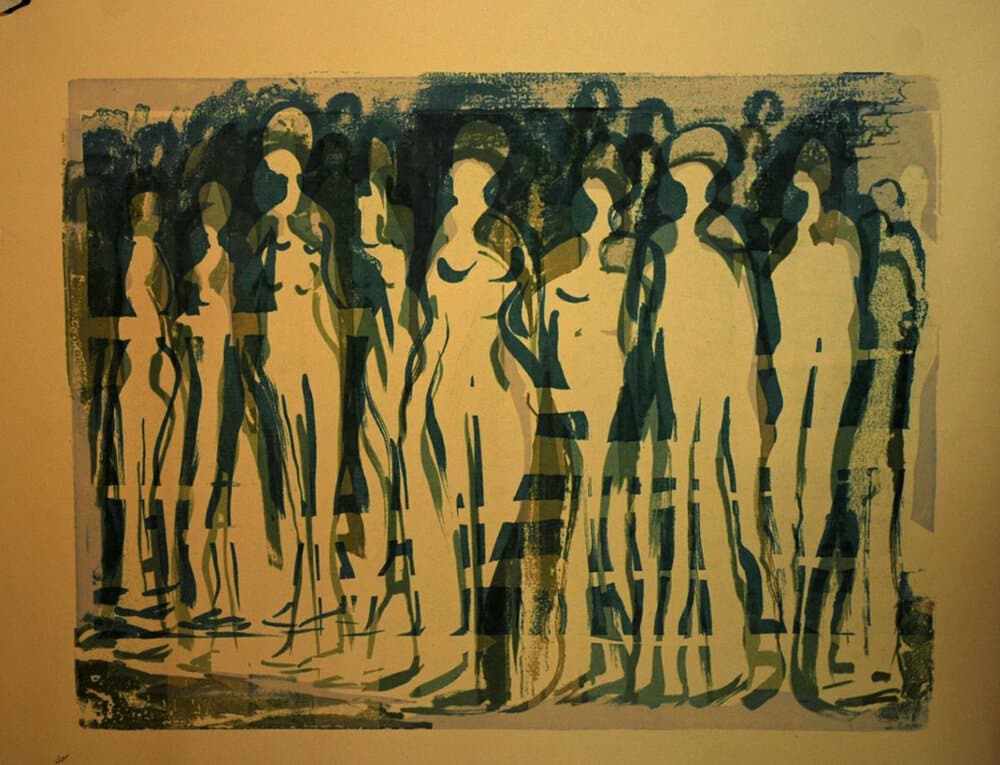
He walked away with “a huge pile of mostly Alma Goetsch silkscreen prints and Kathrine Winckler’s oils on Masonite,” he said, but he only has “a couple” of oil paintings left.
The artists, both of whom pushed gender boundaries of the time by earning college degrees and pursuing careers, exhibited a “mid-century abstract” style, according to Triola.
“If you know anything about mid-century abstract art, they were right on because their use of colors and forms during that period reflects what was going on nationally and internationally. And they were two of the few major artists at Michigan State University at the time who were doing serigraphs and oil paintings,” he said.
The duo pushed another gender boundary, living alone as unmarried women. They began sharing an apartment in 1931, but they longed for a true home. They were both fans of Wright’s work and dreamed of commissioning a house from him, but the cost seemed out of reach. Then, Wright designed his first Usonian home, a more affordable, single-story dwelling characterized by its simple building materials, open floor plan and abundance of natural light. He would later go on to design more than 1,000 Usonian homes.
The lower-cost, nature-driven home drew Goetsch and Winckler’s attention. At the same time, they had signed on to live in a forthcoming cooperative of homes for faculty at the southeast edge of campus. They, alongside other cooperative participants, pitched the idea of having Wright design some of the homes to the leader of the project. She agreed, and 17 acres were reserved for Wright’s homes.
Then, as construction was about to begin, the financier withdrew. By the next year, the project had been abandoned. But Goetsch and Winckler didn’t give up on their dream. They raised the funds themselves and eventually bought a plot of land in Okemos, with construction beginning two months later.
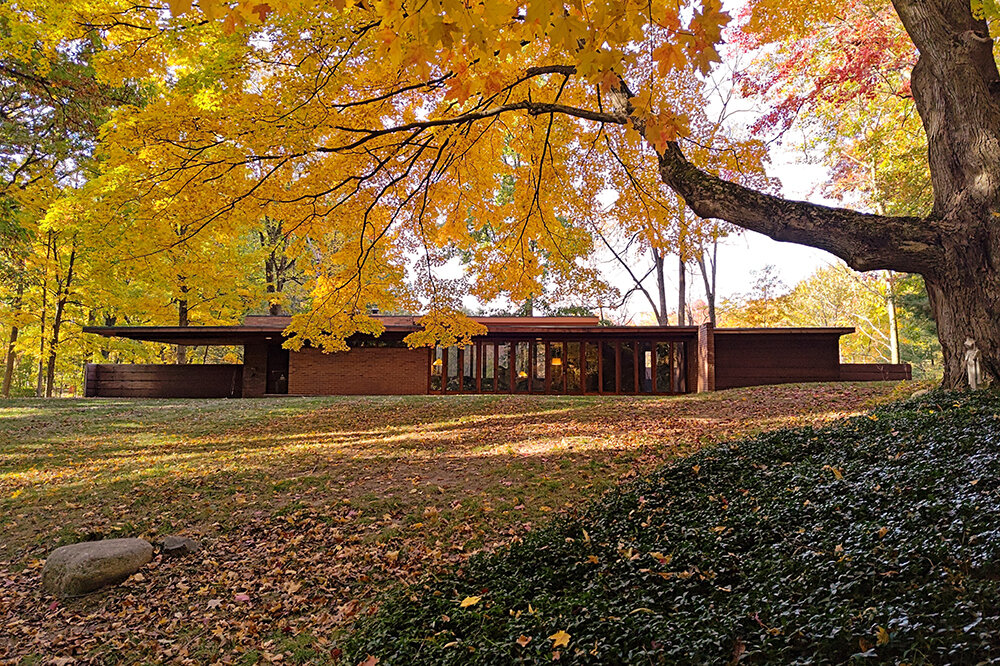
Wright later reportedly christened the Goetsch-Winckler House his “favorite small house.” It features the open floor plan and large windows of his first Usonian house, aiming to encourage harmony with the environment, something that resonated with the modernist homeowners.
Today, the home is owned by architecture enthusiast Nate Meyer and his wife, who have made the property more accessible to the public. In their first year of ownership, they’ve hosted more than 200 guests for free tours and opened up bookings for overnight stays. In the future, they hope to host more creative events such as student art shows, en plein air painting, musical performances, book readings and beyond. Saturday’s art sale will serve as somewhat of a test run.
“This art show is our first major event. We’re going to see how it goes, but we’re interested in seeing what we can do with the community and with local art institutions to continue to inspire art through the Goetsch-Winckler house,” Meyer said.
He noted that the monthly tours have become quite popular, with a waitlist of more than 100 people. He sees Saturday’s event as an opportunity to whittle away at that list.
“This weekend, I opened about 100 seats on my own website for private access tours, and then I’m also doing three tours on Sunday,” he said. “So, I’m really hitting a lot of tours this weekend to try to relieve a lot of pressure on people who want to see the home.”
He encourages interested attendees to pre-register on his website, experienceusonia.com, to avoid overcrowding.
Meyer plans to use a portion of the proceeds from the art sale, half of which will be donated to the house, to purchase works by Goetsch and Winckler. He and his wife already have a small collection of their art, which he emphasized is not for sale.
“Everything that we’ve gotten in, we’re keeping with the home,” he said. “And we’re actually talking with the Broad about possibly donating all the artwork and then taking it on loan at the house to protect it. I know Bill has his own motivations, but my goal is to use this weekend as an opportunity to help architecture folks see the home and gain funds to purchase more artwork.”