Enduring traditions, modern additions
For Gianna Taracks, brewing coffee isn’t just a job. It’s a craft.
“It’s not just beans that you grind up and pour hot water over,” she said. “There’s …
Diverse options underscore a thriving local coffee scene
For Gianna Taracks, brewing coffee isn’t just a job. It’s a craft.
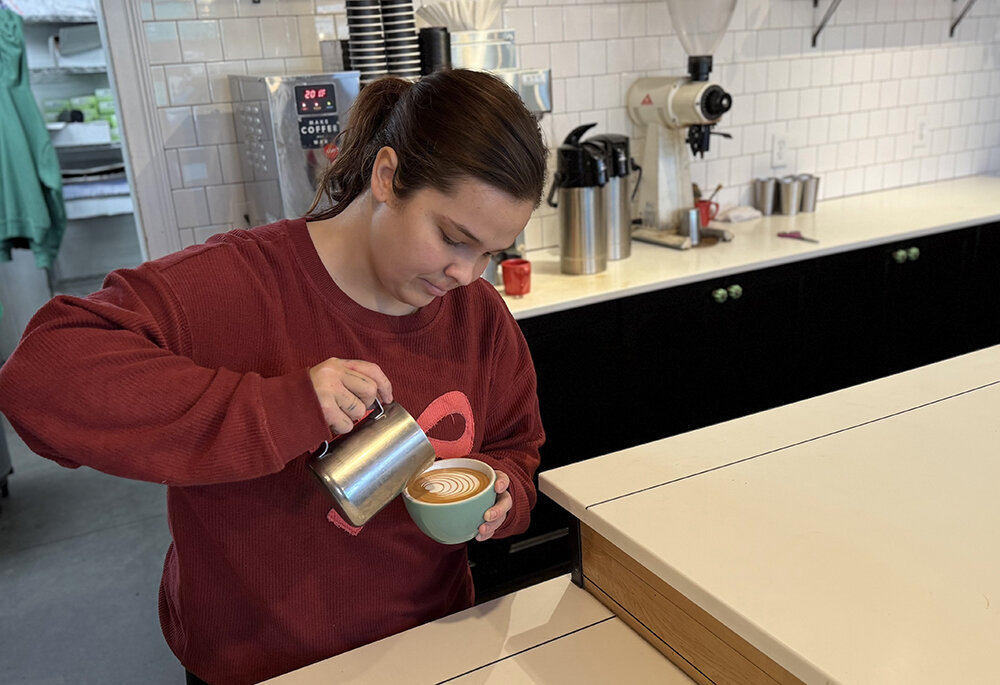
“It’s not just beans that you grind up and pour hot water over,” she said. “There’s so much more to it.”
The eastside Strange Matter Coffee manager has been a barista for eight years. With her experience, she can tell whether an espresso shot will turn out well just by watching someone grind the beans and tamper the grounds. She practices latte art. She knows the difference in flavor notes between different temperatures of the exact same cup of pour-over coffee. She’d like to own a coffee shop one day.
Taracks considers herself and Strange Matter part of the “third wave” of American coffee, a newer approach that generally involves lighter roasts and brewing methods meant to emphasize the flavors of unique beans. This approach differs from “second wave” coffee, distinguished by flavored drinks that either complement or cover up dark-roast espresso blends. Think Biggby or Starbucks. And while, to the uninitiated, a $5.75 pour over from Strange Matter may be indistinguishable from a $1 cup of joe from the Speedway across the street, the coffee aware — or coffee snobs, depending on who you ask — taste a world of difference.
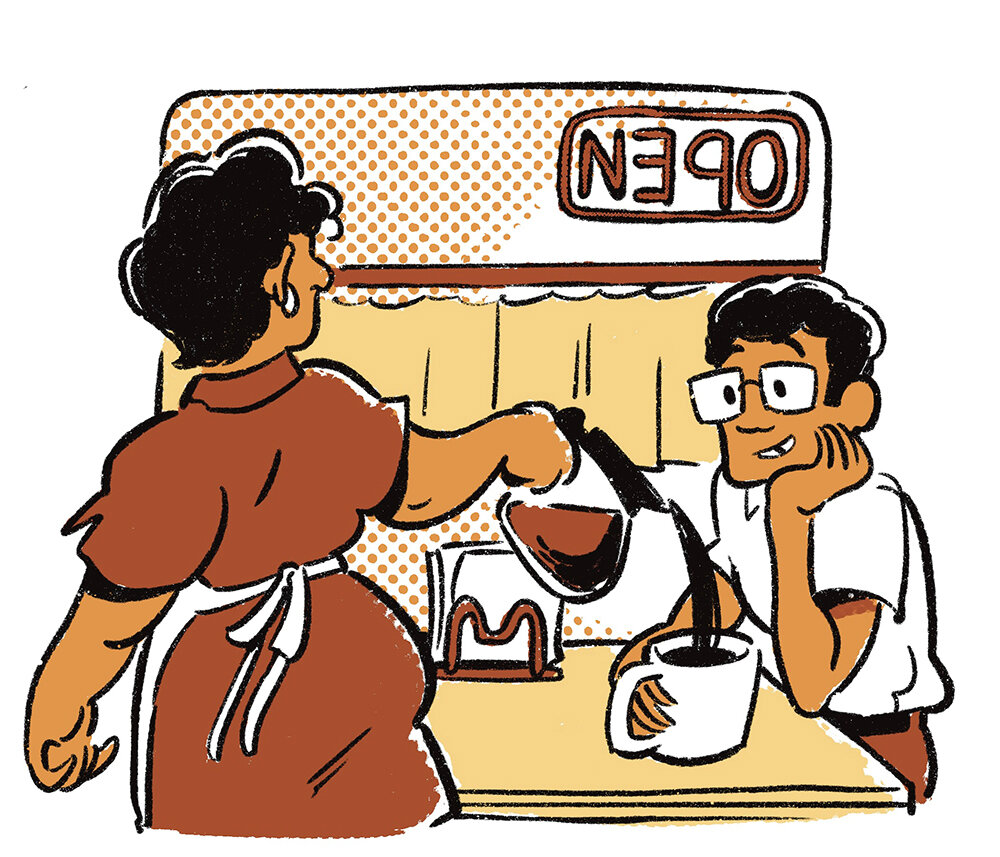
But the evolution of coffee in the Lansing area has been far from linear. Good Truckin’ Diner added an espresso bar at its Old Town location, while Fleetwood Diner’s customers haven’t even taken to flavored creamer. Biggby opened in 1995 amid a boom of jazzy coffeehouses that flourished in the evenings. The Biggby of today is vastly different from that first location, co-founder and co-CEO Bob Fish said. The chain is taking a page out of the third-wave book and focusing on equitable, “farm-direct” beans, sourced from local roastery Paramount Coffee Co., which turned 90 this year.
If there’s one thing owners and managers of roasteries, diners, chains and third-wave cafes agree on, it’s that the classic cup of black coffee isn’t going anywhere. And third-wave owners said there’s a world of difference not just between their shops and their second-wave counterparts, but between each other.
“It’s not about one being better than the other,” James Defrees, co-founder of third-wave coffee shop and roastery 517 Coffee Co., said. “A lot of us are doing different things, and it’s an expression of who we are as individuals and citizens of Lansing. Our personalities come out in our businesses.”
The first wave
Long before the yuppies of yore began sipping espresso-and-milk concoctions with fancy Italian names, Lansing’s coffee drinkers looked to diners and other restaurants open for breakfast for their morning coffee. The “first wave” of coffee consumers tended not to consider the roast type or origin. Maxwell House, Folgers and Cafe Bustelo were common fixtures, and percolators and automatic drip machines dominated.
In the 1980s and ‘90s, some consumers began moving to drinks brewed with espresso, a concentrated form of coffee made with a pressurized machine. But those who stuck with the classic didn’t stop innovating.
Today, Lansing’s first-wave coffee purveyors are still going strong. Danielle Schick, manager at Fleetwood Diner, said plenty of customers come in for nothing but coffee.
“We have several regulars that just come in for coffee, and they drink it black all day long,” she said. Fleetwood’s coffee costs $3.49 and includes unlimited refills. “It’ll be 10 o’clock at night, and they’re still drinking a pot of coffee. Because of that, we haven’t really changed our coffee much.”
She said she’s had customers ask about iced coffee or flavored creamers, but they’ve been “few and far between,” and additions to the coffee menu haven’t panned out.
Local convenience store chain Quality Dairy’s standard coffee isn’t going anywhere, but offerings are increasing, marketing manager Phil Platte said.
QD started out with only one blend of coffee, but it has added additional blends, flavored coffee, syrups and creamers “as people have looked for more variety in what they drink in the morning,” he said. He added that the “typical black cup of coffee” is still popular, but that some people want drinks that are more of a “treat.”
Inspired by second-wave shops like Starbucks and Biggby, which Platte said “created an industry that was never there before and built a customer base that’s looking for more variety,” QD plans to introduce a machine with an iced coffee option at its Dimondale location to test the waters.
Rich Schaafsma, chief sales officer at Paramount Coffee Co., said home consumers are becoming increasingly interested in grinding their coffee themselves. This results in a fresher flavor, since pre-ground coffee goes stale more quickly. But single-pod coffee for Keurig machines is still a growing market, he noted.
“The mass market is where people want variety.”
The second wave
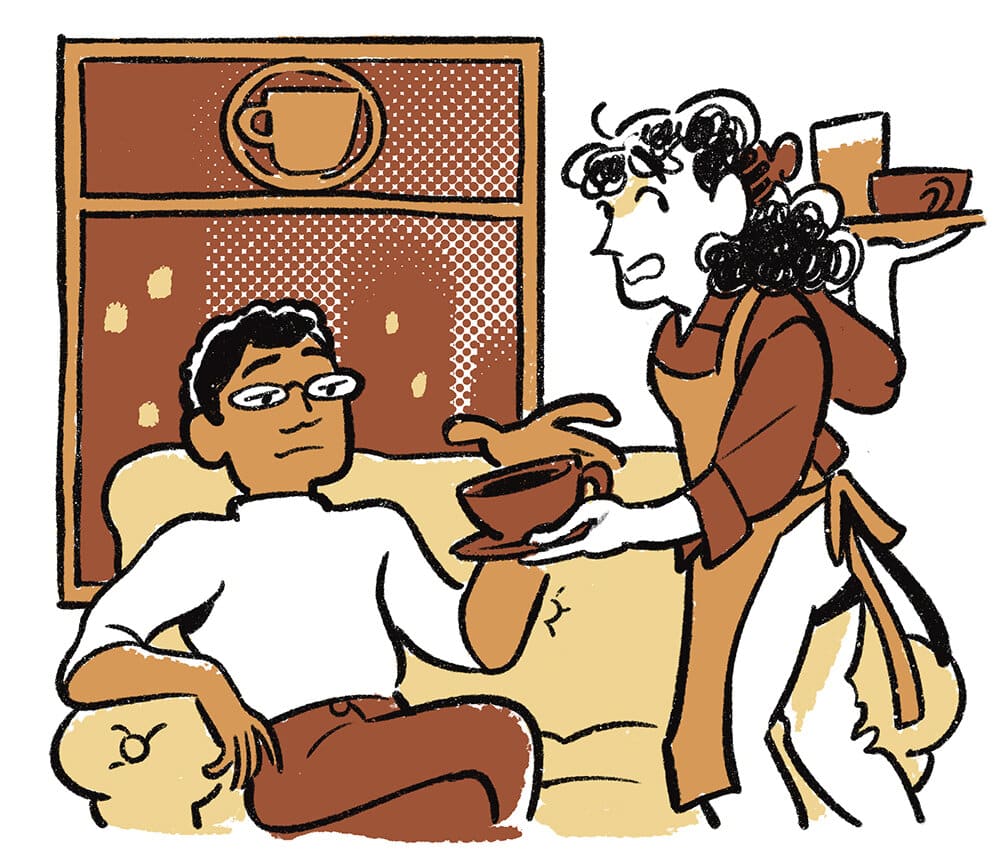
Fish said he was convinced Americans would never drink “quality coffee” after moving to the U.S. from Europe.
He was surprised, then, when Ann Arbor-based coffeehouse Espresso Royale opened a location in East Lansing in the late 1980s. At the time, locals still mostly drank their coffee at diners, he said. It would be a decade until Starbucks came to the area.
He was even more surprised to see more of those coffeehouses crop up in the ensuing years.
“It was actually quite unusual for Lansing,” he said. “Lansing was not a particularly progressive place, but there were more of these independent coffee shops. Starbucks had only just left Seattle, but Lansing was ahead of the curve.”
By the time he opened the first Biggby in 1995, Fish was throwing his hat into a crowded ring. A Lansing State Journal article from May 1995 reported there had been seven local coffeehouses a year prior, but that number had more than doubled.
Starbucks and Biggby may be remnants of the second wave, but today’s Biggby is a far cry from 1995’s, Fish said.
“We had 3,000 square feet with couches and fireplaces, and people held their book clubs there and so on,” he said. “Today, we’re at 450 units — going on 500 — in 13 states, and most likely, it’s a drive-thru only. As often happens in American culture, there’s a migration to convenience and price.”
Judith Bridger, who opened the downtown coffeehouse Dancing Goat in 1994 and ran it until its closure in 1998, said the business’ atmosphere was inspired by a visit to the original Starbucks in Seattle.
“We weren’t a hippie place at all, and we weren’t that obscure,” she said. “I didn’t have fancy names and strange sizes.”
Bridger said the Dancing Goat was the first downtown business to have outdoor seating, and she brought live music to the patio during some lunch and dinner hours.
Coffeehouses back then took “the traditional Italian approach to espresso,” according to Strange Matter founder Cara Nader. That meant espresso blends with as many as 10 different types of coffee, “roasted beyond anything so that they’re black and oily, and all you’re tasting is roast.”
“Coffeehouses served a very different purpose back then,” Nader said. “They were more of a gathering place, a place where people could listen to live music, a place where you could do book readings and book signings, and coffee was kind of the background to the vibe.”
Many businesses like Bridger’s died out in the late ‘90s and early 2000s, ushering in an era dominated by Biggby and Starbucks. Biggby settled into a niche, but it didn’t stop changing. That includes its drink options — Fish said younger customers still like coffee, but they prefer it iced and with milk alternatives — and the coffee beans themselves, as consumers become more conscious of equity in coffee.
“If we talk about equity in coffee, as an example, perhaps my father couldn’t care less, you know? But my son wants to know where his coffee is coming from and what kind of impact it has, whether that impact is positive or negative,” Fish said.
To that end, Biggby is focusing on what Fish calls a “farm-direct” model, buying “directly from the producer” to eliminate “as many of the nefarious or unnecessary middlemen or hands in between” as possible and using the inevitable savings to pay producers better. Fish said Biggby is currently 50% “farm direct” and aims to hit 100% by 2028.
But even as Biggby ups its coffee game, it’s not trying to compete with independent, third-wave shops. Fish knows his consumer.
“I think somebody who goes to Strange Matter might do that when they have a moment where they can be more relaxed, take their time and so on,” he said. “It’s a real indulgence for them. And they might end up at a Biggby when they’re more hard-pressed to get to work, or they’re on the road and see something familiar.
“Strange Matter would need to worry more if Blue Owl showed up next door than if Biggby did,” he continued.
The third wave
When Defrees first opened a bag of coffee from Chicago roastery Intelligentsia, he thought there had been a mistake. He had been gradually working his way up the coffee ladder since moving to Lansing in 2003, first experimenting with different drinks at Biggby, then switching to grinding his own beans, then moving to buying fair trade. But this was altogether different. The beans weren’t dark and oily.
“I’d never had coffee roasted that light before,” he said. “I actually thought there was something wrong with it. But I brewed it anyway, and it blew my mind. After that, I started roasting.”
In 2014, he founded 517 Coffee Co. and began selling his products at farmers markets. At first, customers frequently requested dark roasts. But they’ve since gotten the bug. Natural process coffee beans, which are allowed to ferment in the coffee cherry before being extracted, are now popular for their fruity flavor.
The aughts in Lansing were mostly dominated by chain coffee shops as third-wave cafes began to emerge in bigger cities. People like Defrees and Nader brought third-wave techniques to Lansing after learning them from outside cafes and roasteries.
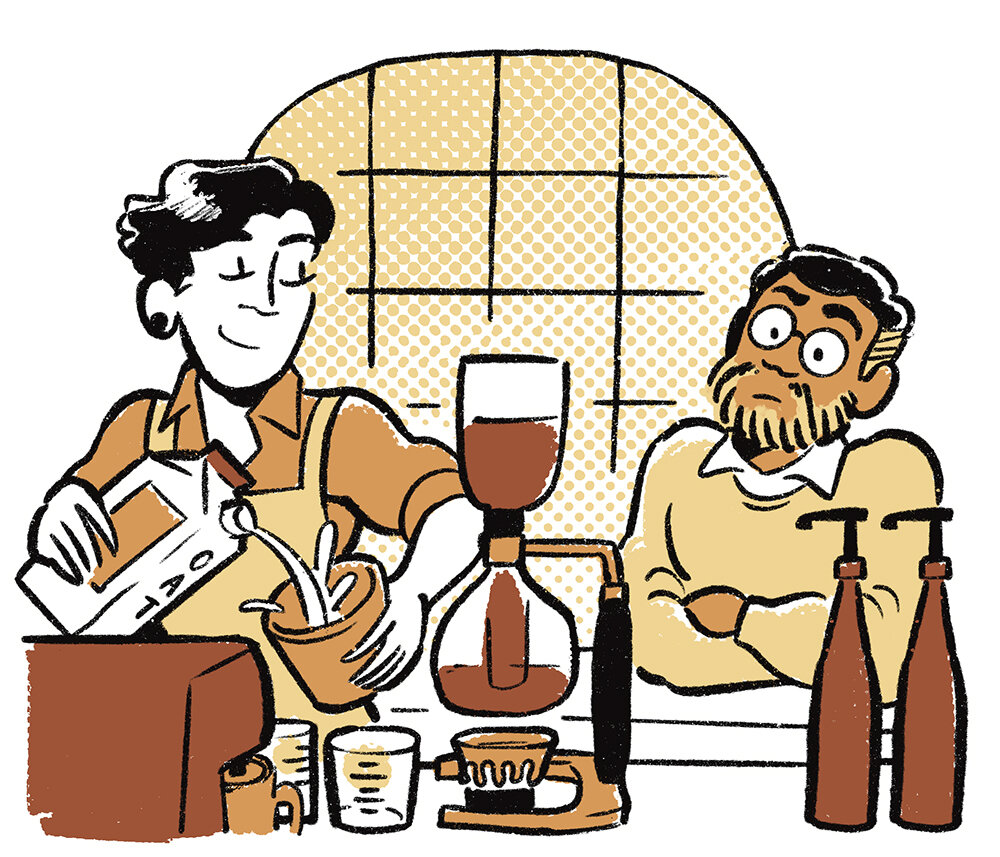
Nader’s first job brewing coffee was at the cafe in the Traverse City Borders bookstore. Back then, she drank “horrifying” sugary beverages, even earning the nickname “extra-stirred girl” among her coworkers. But as she continued working at other cafes, she developed a fascination with the craft behind coffee and eventually began competing in national barista competitions.
“When I started doing that, I started to really appreciate more traditional coffee beverages,” she said. “So many folks think you’ve got to add sugar, cream, all this stuff, and that’s really what you need to do with bad coffee. Good coffee tastes great without any of those additives.”
After she tried pour-over coffee and was blown away by the experience, she convinced the owners of the coffee shop she was working at to add it to the menu.
Despite the fancy techniques, Lansing’s third wave has partly been a return to tradition. Nader said Strange Matter serves traditional macchiatos — unsweetened espresso with a small dollop of milk foam — as opposed to the sugary caramel beverage of the same name invented by Starbucks.
That means third-wave shops are more competitive with each other than with the chains.
“There’s very little overlap,” Nader said. “There’s a whole demographic of folks who keep Starbucks and Biggby afloat, and then there’s a completely separate group of folks that are like, ‘That’s way too much money. I’ll stick with my diner or Speedway coffee.’
“If you’re paying a dollar for coffee and you like it, you’re not going to just suddenly be like, ‘Oh, I’ll go to this coffee shop and spend $6 for a coffee that’s half the size.’”
But even the third-wave shops are at a surprisingly happy medium.
“I think Strange Matter does an amazing job with everything they do, which is why I don’t do a lot of the things they do,” Trisha Koloski, owner of The Hob Nob coffee shop downtown, said. “Every time anybody asks me for a pour over, I point my finger that way.”
Koloski and her friends used to frequent second-wave East Lansing coffeehouse Caffe Latte in the evenings.
“Not only could you still smoke cigarettes in the place at that point, but there was always live entertainment, be it an open mic night or a little jazz band,” she said. “That was the place to go after 7 o’clock at night.”
The Hob Nob opened in 2022, at a time when “overly complicated, sweet, whipped-up beverages” were becoming less dominant, Koloski said. She takes inspiration from coffeehouses and even from diners.
“When I opened up The Hob Nob, we were geared more toward that classic cup of coffee, your classic cappuccino, your classic latte,” she said. “Sure, you can add flavors to those things if you want, but what about a flat white? What about just espresso? What about an actual macchiato?”
Kolski said she’s glad to see a healthy environment for independent cafes, as well as a model that “is not, like, ‘How many ice cream flavors can I make your drink taste like?’ It’s more like, ‘Can I give you a really good cup of coffee every time?’”
Today’s coffee scene has something for everyone. Château Coffee Co. eschews tradition with a medium-light-roast espresso, courtesy of 517 Coffee Co. Strange Matter specializes in pour overs. Blue Owl flavors its drinks with honey and essential oils. Constellation Cat Cafe makes its own syrups — and, of course, has a room full of cats.
Last year, 517 Coffee Co. began hosting an annual coffee tour called The Grind, inviting consumers to purchase beans and brews from several local cafes. It’s a reminder of the Lansing coffee scene’s diversity, with each shop offering something special.
“When I first moved here, you mostly just had the chains,” Defrees said. “But when you walk in here, you’re going to get a different overall experience than you would at Constellation or Château or Blue Owl. And that’s what I really want people to see and appreciate.”